Best 9 Types of FIBC Jumbo Bags: The Ultimate Selection Guide

Master industrial packaging with our FIBC Bag Selection Guide. Discover the 9 essential types of FIBC jumbo bags, from Type C conductive to space-saving baffled bags, to optimize your supply chain safety.

What is a FIBC Jumbo Bag? Types, Uses & Benefits Explained

FIBC jumbo bags, also known as bulk bags or super sacks, have become an essential part of modern industrial bulk packaging. In this FIBC bag selection guide by The Crrest International, we explain everything you need to know about technical types and safety standards to help you choose the right solution for your business.
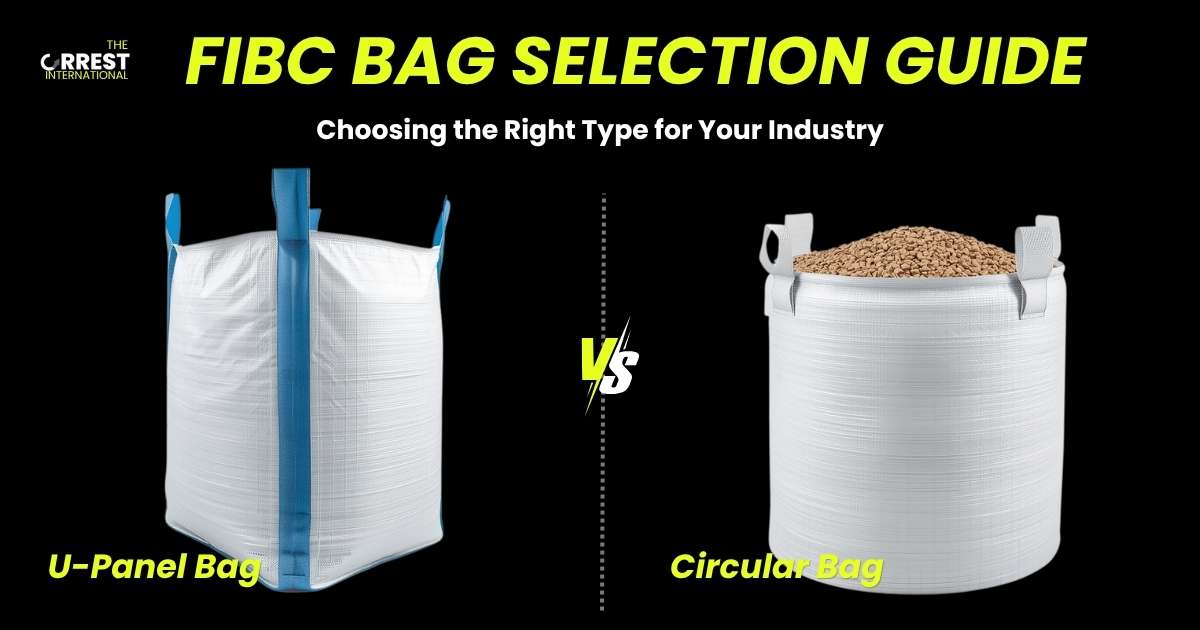
FIBC Jumbo Bags selection guide showing different industrial bulk bag types

In this comprehensive guide by The Crrest International, we explain everything you need to know about FIBC jumbo bags—from technical types and safety standards to industry-specific benefits—helping you choose the right solution for your business.

What is a FIBC Jumbo Bag?

A FIBC (Flexible Intermediate Bulk Container) jumbo bag is a large, heavy-duty bag made from high-strength woven polypropylene (PP) fabric. These bags are engineered to store and transport dry, flowable materials like powders, granules, and minerals in quantities typically ranging from 500 kg to 2,000 kg.

Key Characteristics:

  • Durability: Made from UV-stabilized woven PP.
  • Handling: Equipped with integrated lifting loops for forklifts and cranes.
  • Efficiency: Lightweight tare weight compared to rigid containers.
  • Sustainability: 100% recyclable and often reusable.

Understanding The 9 Types Of FIBC Jumbo Bags

To choose the right bag, you must consider both its structural design and its electrostatic properties.
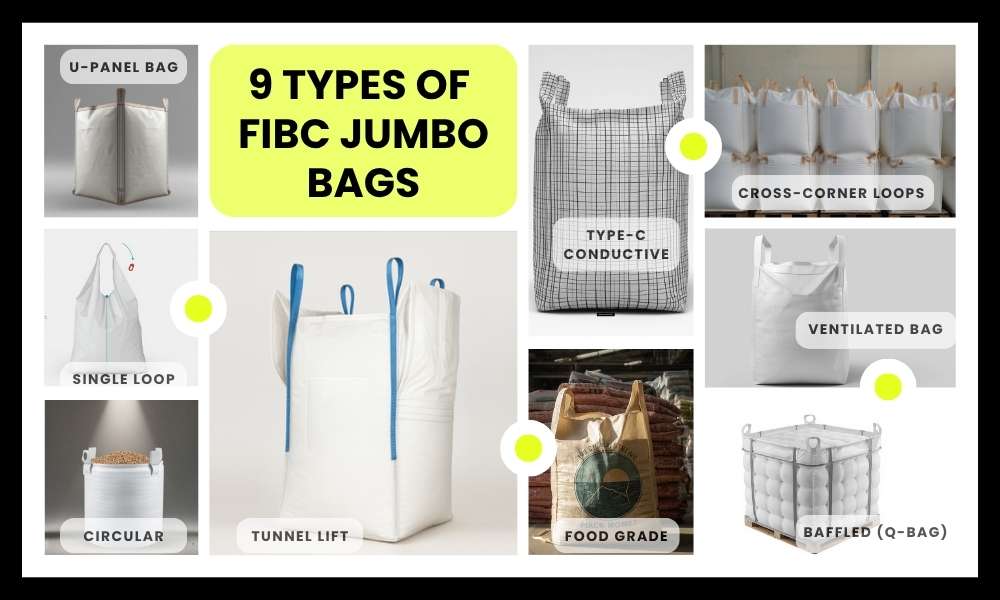
Infographic of 9 types of FIBC Jumbo Bags including baffled and ventilated designs
Structural Designs
  1. U-Panel Bags: Built with three fabric panels, offering excellent shape retention and load stability.
  2. Circular (Tubular) Bags: Woven as a single cylinder, eliminating vertical seams and reducing the risk of fine-powder leakage.
  3. Baffled Bags (Q-Bags): Features internal fabric “baffles” that prevent the bag from bulging, saving up to 30% more space in shipping containers.
  4. Ventilated Bags: Designed with air-flow strips, perfect for agricultural produce like onions and potatoes.
Lifting & Loop Variations
  1. Single & Two-Loop Bags: Cost-effective designs where the fabric itself forms the lifting point; popular for fertilizers.
  2. Tunnel Lift FIBC Bags: Features “sleeves” on the sides for forklift prongs—perfect for one-man operations.
  3. Cross-Corner Loop Bags: Loops are sewn into the body fabric rather than seams, ensuring they stay upright for easy forklift access.
Specialized & Safety Types
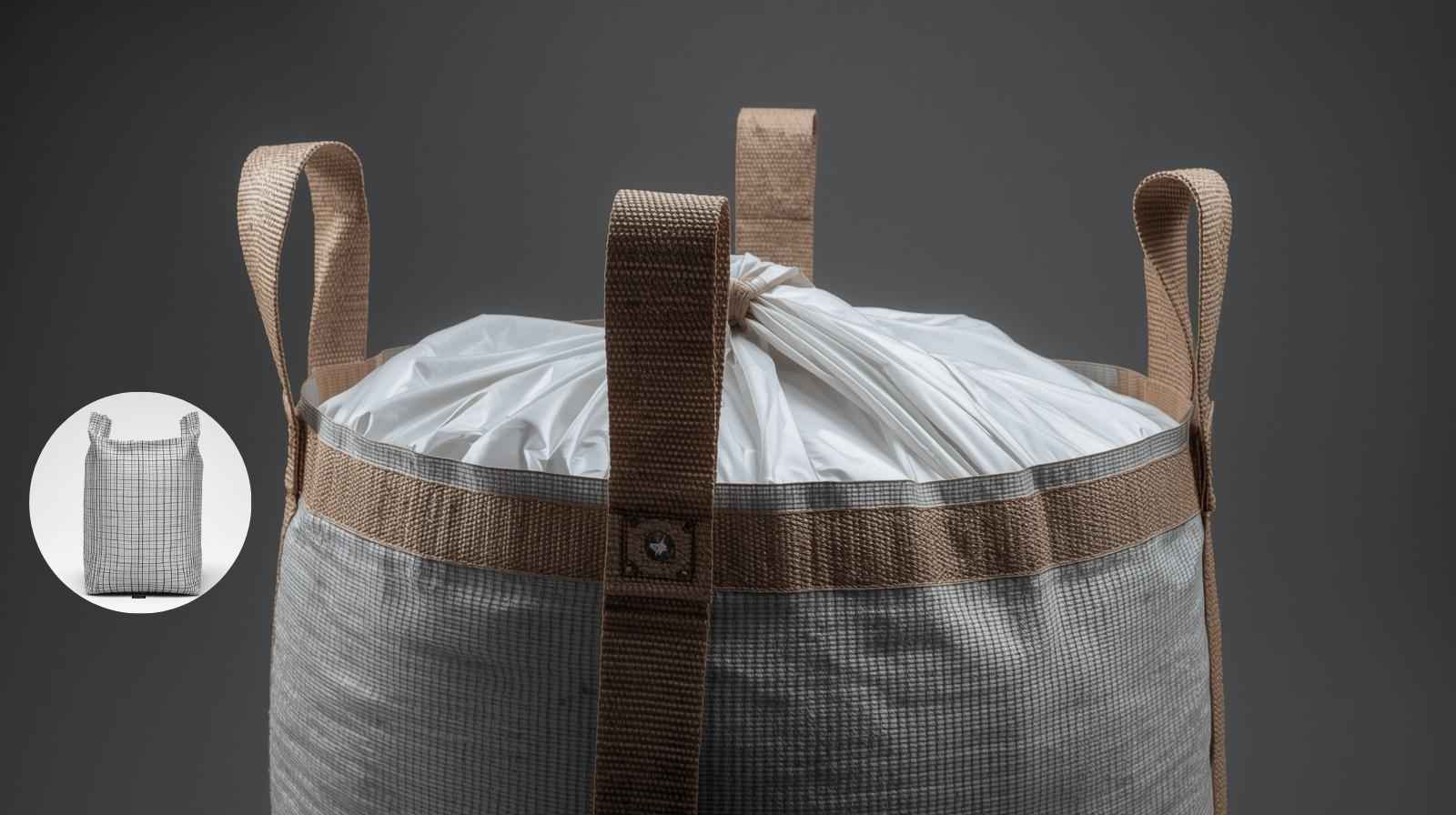
  1. Type C Conductive Bags: Interwoven with carbon or silver threads; must be grounded to prevent explosions in hazardous zones.
  2. Food-Grade FIBCs: Produced in high-spec “Cleanrooms” with ultrasonic cutting to ensure zero contamination for sugar or flour.

SWL and Safety Factor in FIBC Jumbo Bags

When choosing FIBC jumbo bags, understanding Safe Working Load (SWL) and Safety Factor (SF) is essential.
Safe Working Load (SWL)

SWL refers to the maximum weight a bag can safely carry.

  • Common SWL range: 500 kg to 2000 kg

Safety Factor (SF)

Safety factor indicates the strength and reusability of the bag.

Safety Factor

Usage Type

5:1

        Single-use bags

6:1

        Multi-use bags

8:1

        Heavy-duty applications

Type C conductive FIBC Jumbo Bags with interwoven threads for electrostatic safety

Choosing the correct SWL and SF ensures safe handling, transportation, and compliance with industry standards.

Uses of FIBC Jumbo Bags Across Industries

Industrial bulk packaging needs vary by sector. Here is how different industries utilize FIBC solutions:

  • Agriculture: Storage of seeds, grains, and fertilizers. Ventilated bags prevent mold in harvested crops.
  • Chemical & Pharma: Safe handling of hazardous powders and active ingredients using Type C or D bags.
  • Construction: Transporting heavy sand, cement, gravel, and debris.
  •  Food Processing: Bulk transport of sugar, salt, and flour using Food-Grade Liners.
  • Mining: Handling high-density minerals and ores with reinforced heavy-duty bags.

Key Benefits of FIBC Packaging

  1. Cost Efficiency: Eliminates the need for secondary packaging (pallets/shrinking).
  2. Safety: High Safety Factor (SF) ratings reduce the risk of workplace accidents.
  3. Optimization: Stackable design maximizes warehouse vertical space.
  4. Protection: Laminated fabrics protect contents from moisture and UV degradation

Benefits of Using FIBC Jumbo Bags

1. Cost-Effective Bulk Packaging

FIBC jumbo bags reduce packaging and transportation costs by enabling bulk handling.

2. High Load Capacity

Capable of carrying heavy loads while maintaining structural integrity.

3. Space Optimization

Stackable design improves warehouse and shipping efficiency.

4. Customization Options

Available in various sizes, designs, and specifications to meet industry needs.

5. Eco-Friendly Solution

Reusable and recyclable materials support sustainable packaging practices.

How To Choose The Right FIBC Jumbo Bag?

Before choosing between the different types of FIBC jumbo bags from bulk bags manufacturers, verify these five criteria:

  1. Material Density: Heavy minerals need higher GSM fabric than lightweight grains.
  2. Safe Working Load (SWL): Do you need a 500 kg, 1,000 kg, or 2,000 kg capacity?
  3. Safety Factor (SF):
    1. 5:1 (Single use)
    2. 6:1 (Multiple use/reusable)
  4. Filling/Discharge Needs: Choose between Spout Top, Duffle Top, or Open Top based on your machinery.
  5. Electrostatic Risk: Is your environment prone to explosive dust or vapors?

Why Choose The Crrest International?

As a leading name among bulk bags manufacturers, The Crrest International provides premium, customized FIBC solutions tailored to your technical specs.

  • Global Quality Standards: Our bags meet rigorous ISO 21898:2004 safety requirements.
  • Customization: From UV-stabilized fabrics to custom branding and dimensions.
  • Expert Support: We help you match the right bag type to your specific industrial application.

Don't leave your industrial safety to chance. At The Crrest International, we provide customized, high-performance packaging solutions tailored to your specific density and safety requirements.

Contact Our Technical Team

Conclusion

FIBC jumbo bags are more than just containers; they are a strategic asset that improves logistics efficiency and safety. By understanding the types—from space-saving Baffled Bags to safety-critical Type C Conductive Bags—you can significantly reduce operational costs.

For high-performance packaging, partner with The Crrest International, your trusted expert in industrial textiles.

FAQs

Q1. What is the standard capacity of a jumbo bag?

A: Most standard bags carry between 500 kg and 2,000 kg, depending on the fabric weight and design.

A: Yes, but only if they have a 6:1 Safety Factor rating. 5:1 bags are strictly for single-trip use.

A: Type C bags must be manually grounded, while Type D bags dissipate static automatically without grounding.

A: Standard woven PP is breathable. However, we offer laminated (coated) bags and PE liners for complete moisture protection.

A: Base your size on the product’s bulk density and the dimensions of your shipping pallets.

Type your paragraph here

Leave a Reply

Your email address will not be published. Required fields are marked *