Sustainable Industrial Packaging 2026: The Future of Bulk Solutions

Stay ahead of global environmental mandates with Sustainable Industrial Packaging 2026. Explore how The Crrest International is revolutionizing bulk logistics through 100% recyclable PP woven bags, reusable FIBC jumbo bags, and carbon-efficient LDPE liners designed for the circular economy.

Sustainable Industrial Packaging 2026: The Future of Bulk Solutions
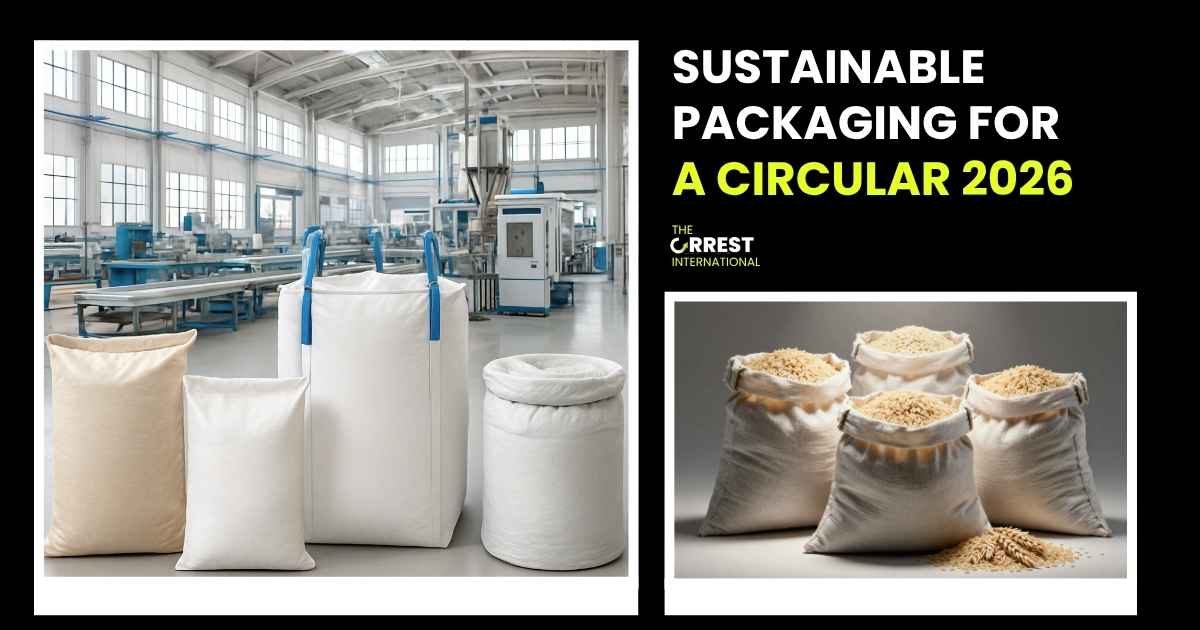
Sustainable Industrial Packaging 2026 solutions by The Crrest International.
KEY TAKEAWAYS: 

In 2026, sustainable industrial packaging has shifted from a trend to a regulatory mandate. By adopting 100% recyclable PP woven bags, high-capacity FIBC jumbo bags, and moisture-resistant LDPE liners, businesses can reduce material waste by up to 40% while ensuring compliance with global carbon-reduction targets. [Read More about our Sustainable Range →]

Why Sustainable Industrial Packaging 2026 Matters

Environmental regulations are tightening globally (such as the latest EPR mandates). Companies adopting sustainable industrial packaging gain:

  • Reduced carbon footprint: Low-energy manufacturing of polypropylene reduces initial emissions.
  • Compliance with environmental laws: Stay ahead of plastic taxes and waste management directives.
  • Improved brand reputation: Align with the “Green Logistics” movement.
  • Cost savings: Significant ROI through reuse (Multi-trip FIBCs) and recycling.

In 2026, the circular economy is driven by three pillars:

  1. Reusability: Moving from single-use to multi-trip durability.
  2. Recyclability: Utilizing mono-material designs (100% PP).
  3. Resource Efficiency: Reducing the weight-to-strength ratio to cut transport emissions.

Key Sustainable Packaging Solutions by The Crrest International

1. PP Woven Bags: Sustainable Industrial Packaging for Agriculture

PP woven bags are among the most widely used sustainable industrial packaging 2026 solutions due to their high strength and 100% recyclability:

  • High strength and long life cycle: Reduces the need for replacement packaging.
  • Reusability: Can be repurposed across multiple industrial applications.
  • 100% recyclability: Easily processed into new PP resin post-consumer.
  • Industry Example: Ideal for the agriculture sector, where bags must withstand outdoor storage without compromising structural integrity.

2. FIBC Jumbo Bags: Bulk Packaging with Minimal Waste
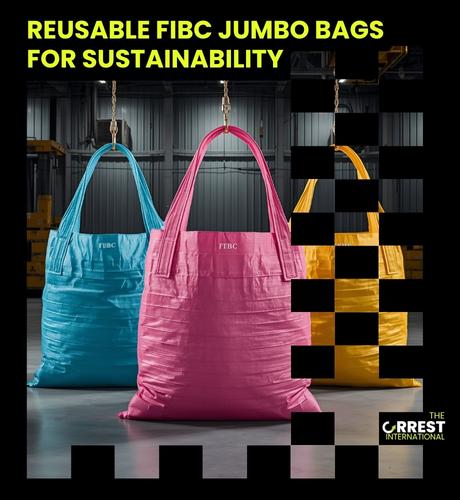
High-strength FIBC jumbo bags on forklift demonstrating Sustainable Industrial Packaging 2026 efficiency.
Single loop FIBC bag on steel chain showing durability in Sustainable Industrial Packaging 2026 applications.

FIBC (Flexible Intermediate Bulk Containers) are a cornerstone of industrial packaging trends in 2026.

  • Sustainability benefits: Reusable for multiple cycles (6:1 Safety Factor).
  • Emission Reduction: FIBCs can reduce transportation-related carbon emissions by up to 15% due to optimized pallet space and high volume-to-weight ratios.
  • Efficient logistics: Lower fuel consumption per ton of material moved.

3. BOPP Woven Bags: Strength Meets Sustainability

BOPP (Biaxially Oriented Polypropylene) woven bags are a key part of the Sustainable Industrial Packaging 2026 lineup, combining visual appeal with environmental efficiency:

  • Lightweight yet strong: Uses less raw material than traditional multi-wall paper bags.
  • Recyclable materials: Fully compatible with PP recycling streams.
  • Zero-Waste Printing: Advanced lamination techniques reduce chemical ink waste.

4. LDPE Liners: Protective and Recyclable

BOPP (Biaxially Oriented Polypropylene) bags combine visual appeal with environmental efficiency:

  • Lightweight yet strong: Uses less raw material than traditional multi-wall paper bags.
  • Recyclable materials: Fully compatible with PP recycling streams.
  • Zero-Waste Printing: Advanced lamination techniques reduce chemical ink waste.

5. PP Woven Rolls: Efficient Manufacturing with Less Waste

PP woven rolls allow for customized packaging with minimal material scrap:

  • Optimized production: Precision cutting reduces manufacturing waste by 10-12%.
  • Scalability: Supports large-scale automated packaging systems.

Comparative Analysis: Finding the Right Fit
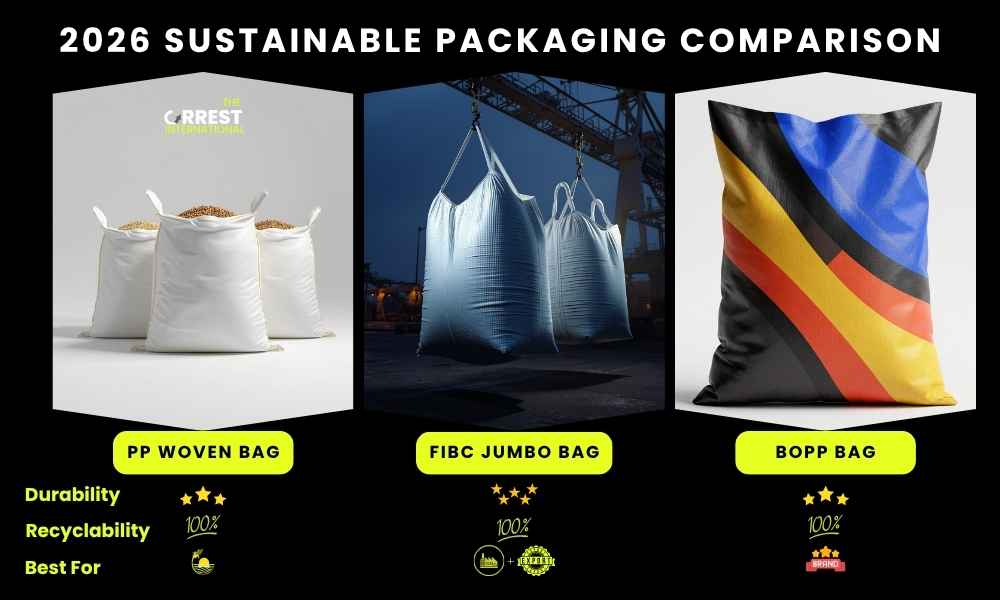
Comparison chart of Sustainable Industrial Packaging 2026: PP woven bags vs FIBC jumbo bags vs BOPP bags for circular economy.

To help you choose the best Sustainable Industrial Packaging 2026 strategy, see how our top products compare in this analysis:

Feature

PP Woven Bags

FIBC Jumbo Bags

BOPP Woven Bags

Best For

Grains, Flour, Sand

Minerals, Fertilizer, Chemicals

Retail Food, Pet Food

Durability

High

Ultra-High

Moderate-High

Reusability

Medium

High (Multi-trip)

Low-Medium

Recyclability

100%

100%

100%

Circular Economy & Industrial Packaging Trends (2026)

In 2026, leading companies are moving away from 'Take-Make-Waste' and adopting Sustainable Industrial Packaging 2026 models that embrace the Circular Economy.

  • Mono-material solutions: Using only one type of plastic (like Polypropylene) to make recycling 3x faster and more efficient.
  • Smart Packaging: Integrating QR codes for lifecycle tracking and recycling instructions.
  • Lightweighting: Designing bags that use 10% less plastic without losing any weight-bearing capacity.

Emerging Trends in Sustainable Industrial Packaging 2026

  • Lightweight packaging to reduce logistics emissions
  • Smart packaging with traceability for lifecycle tracking
  • Mono-material solutions for easier recycling
  • Bulk packaging adoption to cut down waste

Companies investing in these trends are staying ahead in both compliance and customer trust.

Why Choose The Crrest International?

As a trusted global supplier, The Crrest International provides:

  •  High-quality sustainable packaging solutions tailored to 2026 standards.
  • Industry-specific customization for agriculture, construction, and food.
  • Cost-effective bulk options that don’t sacrifice environmental ethics.
  • Technical Expertise: We help you navigate the transition from traditional to green packaging.

Conclusion: Leading the Future of Sustainable Industrial Packaging

The transition to sustainable industrial packaging 2026 is about more than compliance—it’s about innovation, efficiency, and responsibility. Businesses that adopt eco-friendly solutions today will lead tomorrow’s markets.

With advanced products like PP woven bags, LDPE liners, and FIBC jumbo bags, The Crrest International is your partner in leadng the shift toward Sustainable Industrial Packaging 2026 for a greener, more profitable future.

Frequently Asked Questions (FAQs)

Q1. What defines Sustainable Industrial Packaging 2026 solutions?

A: They focus on reducing environmental impact through recyclable, reusable, and resource-efficient materials like PP and LDPE that support a circular economy.

A: Yes. Because they are highly durable and 100% recyclable, they serve as a long-term alternative to single-use plastics, reducing overall environmental waste.

A: By moving material in bulk, they reduce the number of smaller bags used, minimize transportation emissions, and offer high reusability.

A: Yes, LDPE is a widely recycled polymer. Using them also prevents product waste by protecting against moisture and contamination.

A: Industries such as agriculture, food processing, chemicals, construction, and logistics benefit significantly from sustainable packaging due to improved efficiency, reduced costs, and compliance with environmental regulations.

A: It is essential for meeting stricter environmental regulations (EPR), reducing carbon footprints, and satisfying the growing demand for transparent, eco-friendly supply chains.

A: We offer high-quality, customizable, and 100% recyclable solutions like PP woven bags and FIBCs, specifically engineered for industrial durability and eco-compliance.

Leave a Reply

Your email address will not be published. Required fields are marked *